
Confectionery
AI analysis of customer calls
The system transcribes call recordings, detects sentiment and the reason for the call, and managers get statistics by simply asking an AI agent in plain language.
- Client
- Scenario: confectionery
- Format
- Practice case
- Stack
- n8n, AssemblyAI, OpenRouter
- 0manual listens needed to classify calls
- < 1 minto get statistics instead of 5–10 minutes
- 2 minbetween checks for new recordings
The problem
This is a practice case built around a typical confectionery business scenario. The company receives many customer calls, and some of them are feedback on product quality or delivery. Management needs to spot negative feedback quickly and see the statistics.
Done by hand, an employee would have to listen to every recording, judge the sentiment and reason, and enter the result: 4 manual steps per call. Negative feedback is easy to miss, assessments end up subjective, and period statistics have to be counted by hand.
The solution
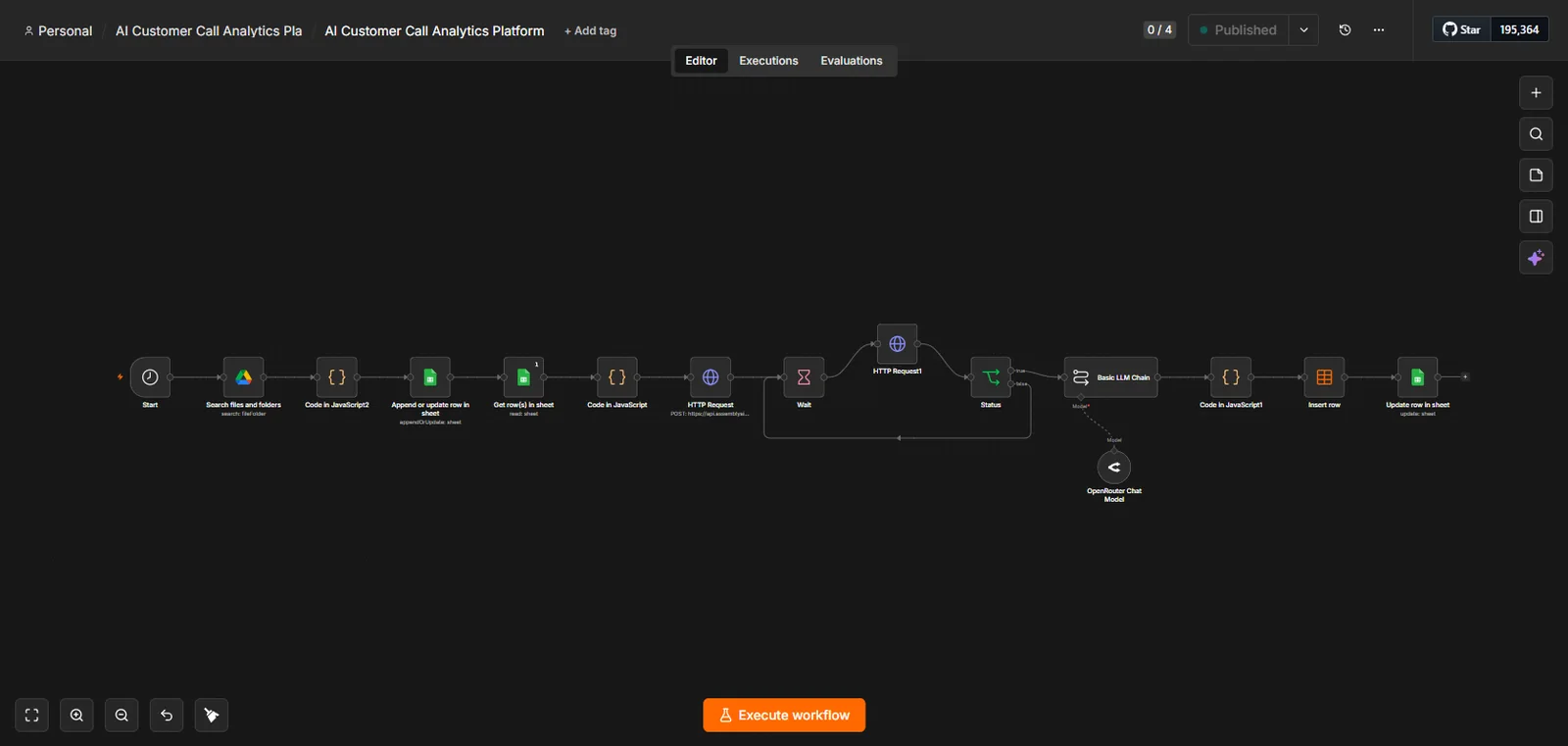
Two connected workflows built on n8n, AssemblyAI and an LLM.
Call processing. Every 2 minutes n8n checks Google Drive, picks up only new recordings and sends the audio to AssemblyAI for transcription. The model then analyses the text and returns strict JSON: sentiment (positive, negative, neutral) and category (product quality, delivery, other). The result is stored in an n8n data table and the recording is marked Done so it is never processed twice.
AI agent for managers. A manager asks in plain language: «How many negative reviews did we get last month?» The agent works out the period, calls a separate Get Call Stats tool and answers from real data: total calls, number of negative calls and their share. The agent never makes up numbers; it always takes them from the tool.
The result
| Before | After | |
|---|---|---|
| Manual steps per call | at least 4 | 0 |
| Listening to classify | every call | not needed |
| Time to get statistics | 5–10 min | under 1 min |
| Checking for new recordings | manual | every 2 minutes |
Every call is assessed by the same rules, and more calls do not mean more manual work.
How the work went
How work on this project went, from understanding the problem to launch and improvements.
- 01
Discovery
Worked through the scenario: what calls come in, what the manager needs to see and how many manual steps one recording takes. At least 4: listen, judge sentiment and reason, log it.
- 02
Solution design
Split the system into two workflows: processing new recordings and an AI agent for the manager’s questions. Defined the categories, the JSON output format and a Done status so no recording is processed twice.
- 03
Build
Built in n8n: a Google Drive check every 2 minutes, AssemblyAI transcription, LLM classification and a Get Call Stats tool for the agent.
- 04
Testing
Ran test recordings with different sentiment and topics and checked the classification. Separately checked that the agent takes numbers from the tool and never makes them up.
- 05
Launch
Both workflows run in n8n on test recordings: a new file on Google Drive is processed automatically, and the manager can ask the agent for stats right away.
- 06
Optimisation
More calls add no manual work. For a real business, the next step is more request categories and an instant alert on negative feedback.
Screenshots
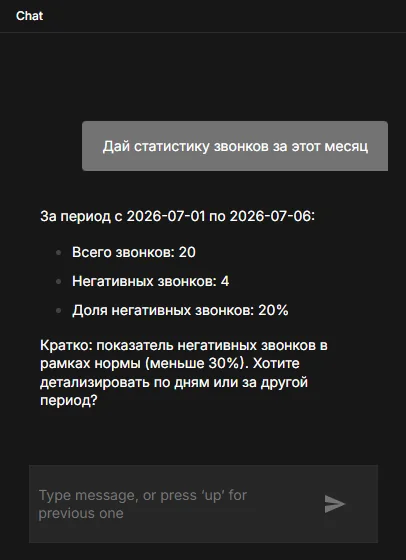 AI agent answering a statistics request
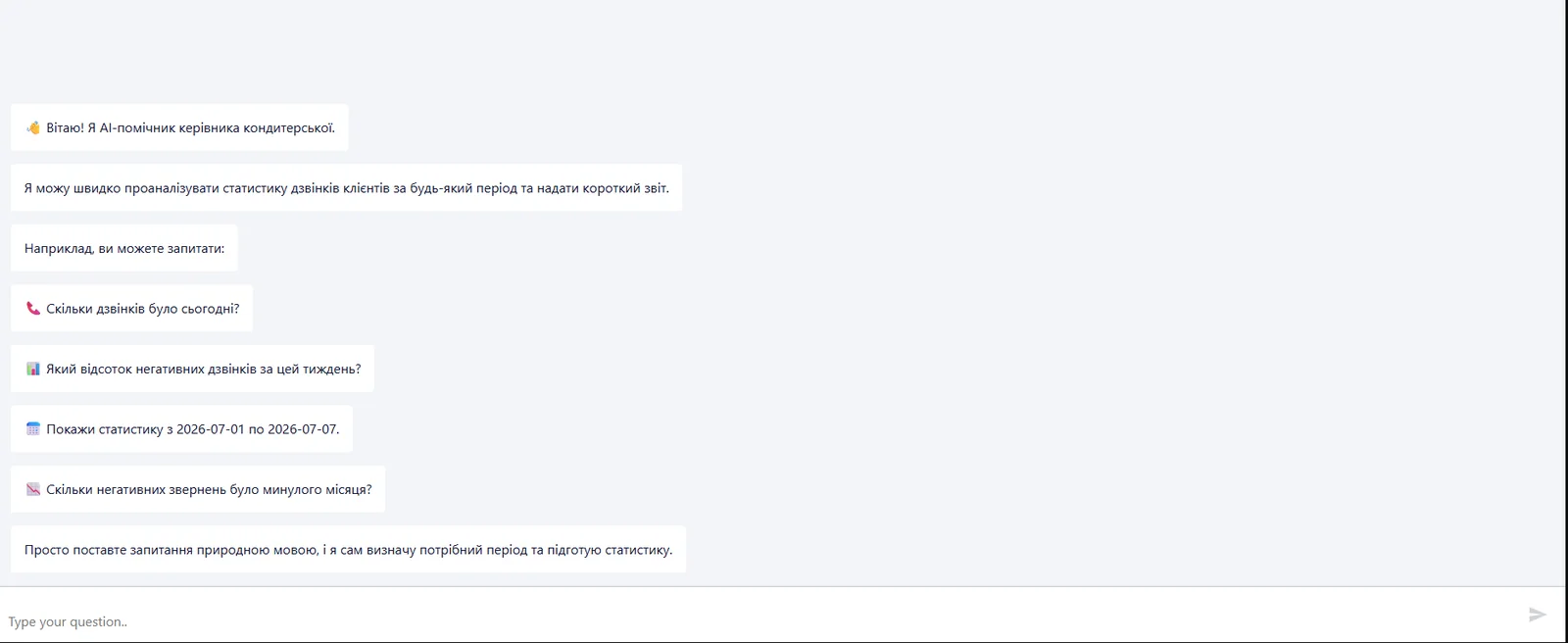 Manager chat with the AI agent
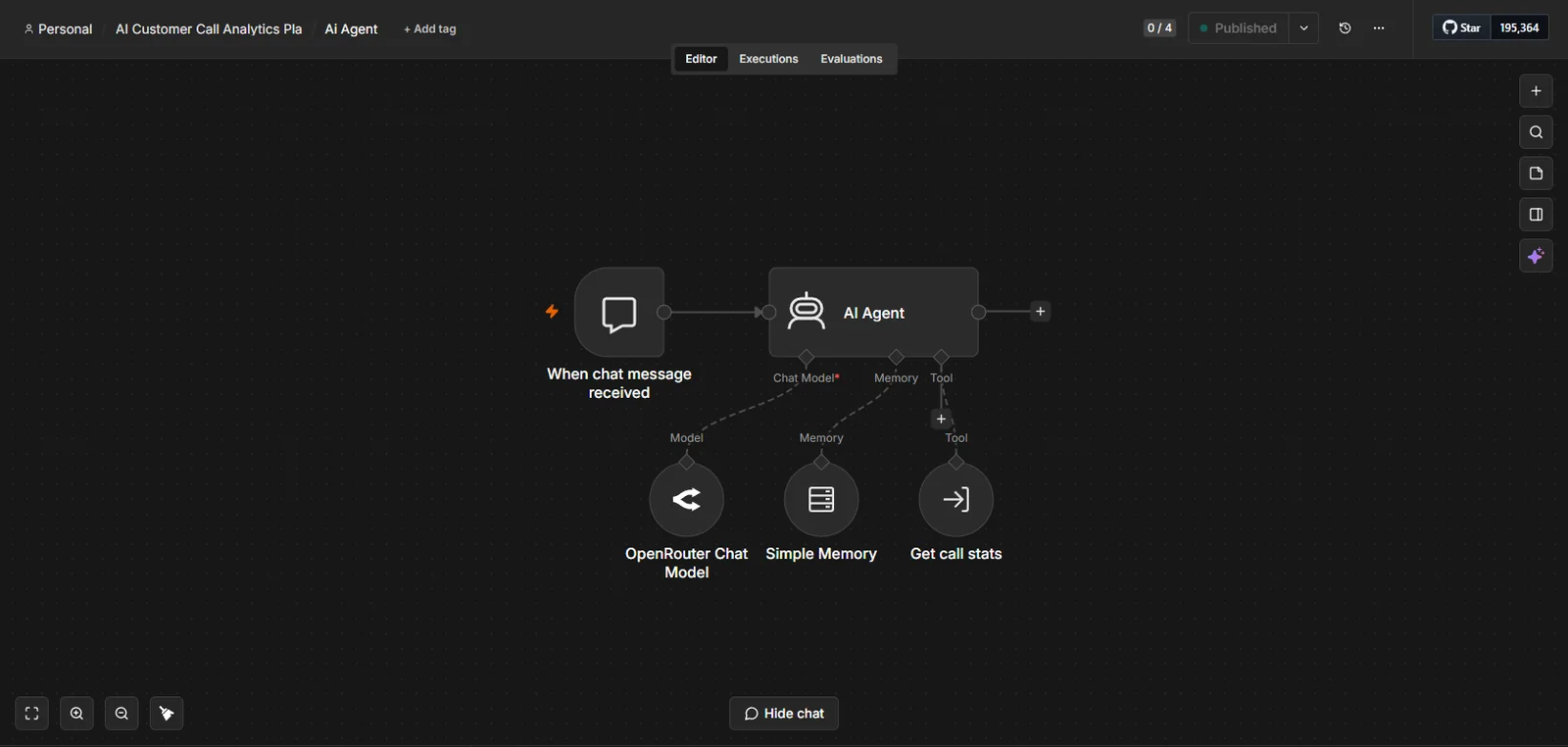 AI agent with memory and a statistics tool
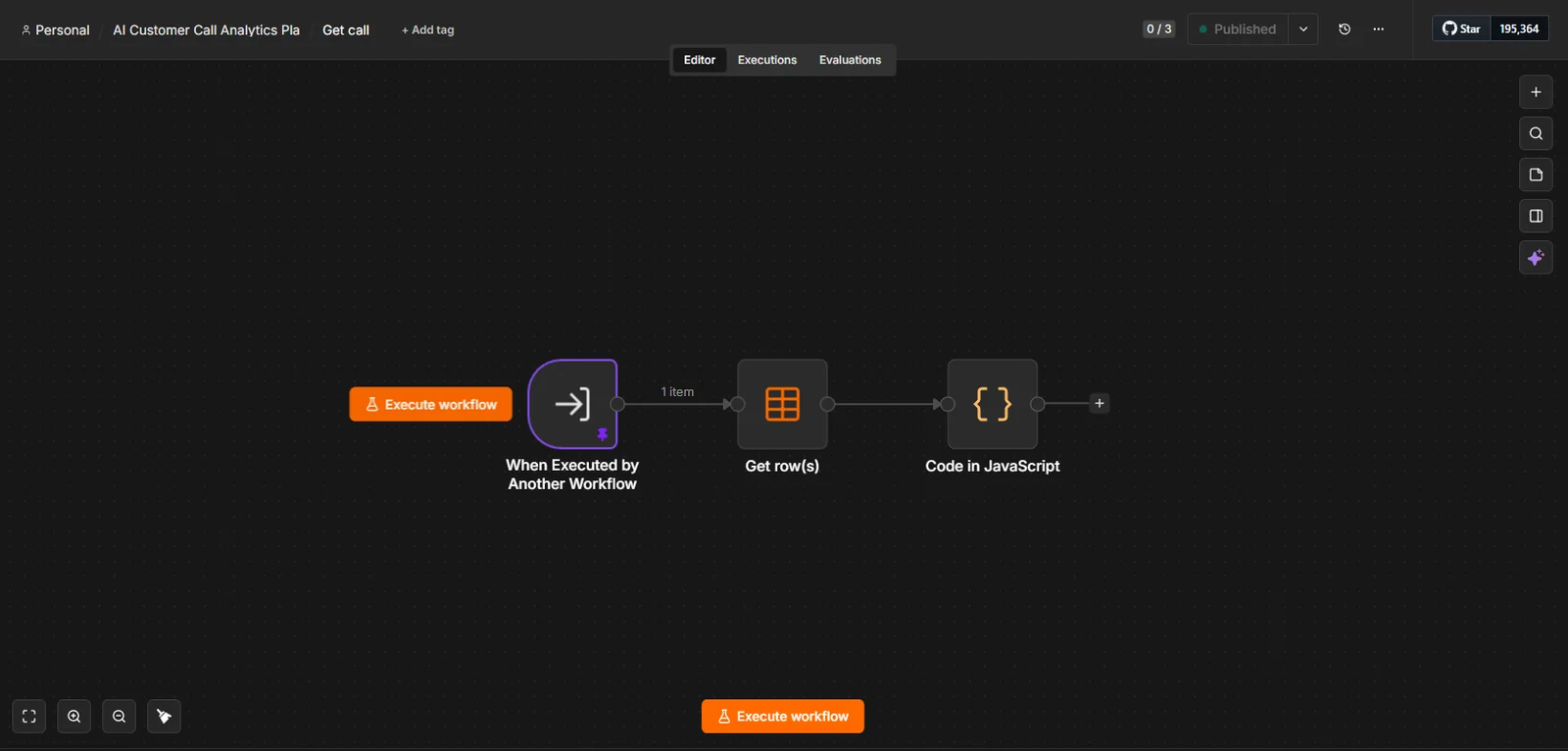 The Get Call Stats tool